> the MDflow blog
Notes from the team building MDflow — on markdown, AI agents, the Model Context Protocol, and the standards shaping how knowledge is written for people and machines.
 12 min read
Web Clipper to Clean Markdown: Save Any Article Your AI Can Read
A web clipper turns any web page into clean markdown you own. Here is how to clip articles the right way — and store them so your AI can read them back as context.
read 12 min read
Spec-Driven Development: Where Your Markdown Specs Should Live
Spec-driven development makes a markdown spec the source of truth your AI agents build from. Here is how the workflow works — and where those specs should actually live.
read 11 min read
Markdown Task Management: One List From Every Checkbox
Markdown task management done right: aggregate every - [ ] checkbox scattered across your notes into one filterable task list — no separate database, no export.
read 12 min read
Encrypted Notes App: How to Keep Cloud Markdown Truly Private
Choosing an encrypted notes app? What zero-knowledge really means, how the top private-notes tools compare, and how to keep your cloud markdown truly private.
read 12 min read
Markdown to PDF, Word, HTML: The Conversion Playbook
Convert Markdown to PDF, Word (.docx), and HTML reliably — a method-by-method playbook covering editor export, Pandoc, and CLIs, with copy-paste commands.
read 13 min read
The Best Second Brain App When Your AI Reads It Too
The best second brain app in 2026 isn't just the one that feels good to write in — it's the one your AI can read. A PKM shortlist judged on agent access.
read 13 min read
MDflow Mobile: A Markdown App for iPhone and iPad (2026)
MDflow Mobile is a native markdown app for iPhone and iPad — browse and search your workspace, edit with autosave, read GFM, and unlock encrypted notes with Face ID.
read 14 min read
Best Notion Alternatives for Markdown People (2026)
The best Notion alternatives for markdown people keep markdown as the source of truth — not a lossy export. Seven honest picks compared for 2026, including agent-ready options.
read 13 min read
Basic Memory vs Hjarni vs MDflow (2026)
A focused three-way comparison of the markdown-native MCP knowledge bases — Basic Memory, Hjarni, and MDflow — with a decision framework for picking the right one for you.
read 13 min read
How to Adopt Google's Open Knowledge Format (OKF) in 2026
A hands-on guide to adopting Google's Open Knowledge Format (OKF): what changed since launch, how to structure a bundle, the conformance rules, and how to start today with MDflow.
read 11 min read
MDflow vs Obsidian for the AI Era (2026)
An honest MDflow vs Obsidian comparison for the AI era — local vault vs hosted, plugin-wired MCP vs a built-in remote server, and which fits your AI workflow.
read 13 min read
Build a Portable AI Memory You Own (ChatGPT + Claude)
ChatGPT and Claude have memory now — but each is a vendor silo you don't own. Build one portable AI memory in markdown that every AI tool can read.
read 11 min read
Turn ChatGPT Chats into a Searchable Markdown Knowledge Base
Export ChatGPT to markdown and turn your conversations into a searchable knowledge base your AI can read back — with a web clipper, folder context, and MDflow.
read 12 min read
AI Agent Memory vs RAG vs a Plain Markdown File (2026)
AI agent memory, RAG, or a plain Markdown file: three ways to give an agent persistent context. What each does, the benchmarks, and what wins in 2026.
read 13 min read
Let AI Agents Write to Your Knowledge Base, Not Just Read It
Most AI setups let an agent read your notes but never update them. Here's why write-back matters and how to let Claude, ChatGPT, and Cursor safely write to your knowledge base.
read 10 min read
MDflow MCP Setup for Cursor, Claude Desktop, and Codex
A step-by-step guide to setting up MDflow's MCP server in Cursor, Claude Desktop, and Codex — copy-paste config for each client, remote vs local, and troubleshooting.
read 12 min read
Folder Descriptions as Agent Context: Retrieval Without a Vector Database
Folder descriptions turn your folders into agent context — a curated retrieval signal that needs no embeddings or vector database. How it works and how it compares to RAG.
read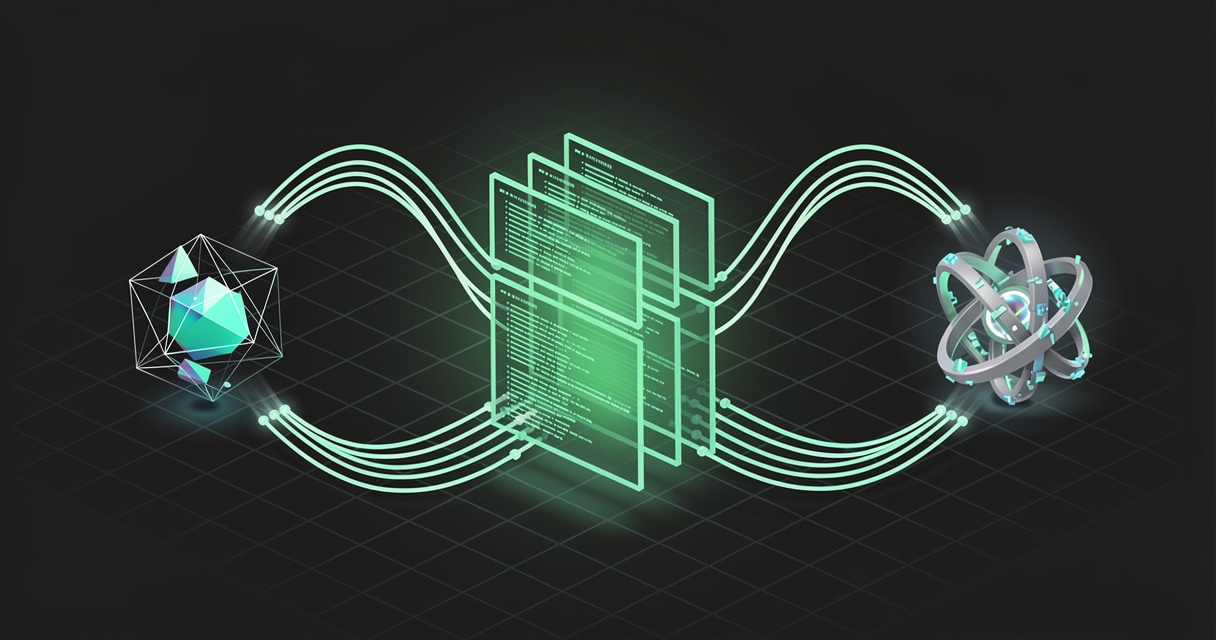 14 min read
The Best MCP Knowledge Base for ChatGPT & Claude (2026)
An honest 2026 comparison of the best MCP knowledge base options for ChatGPT and Claude — MDflow, Hjarni, Basic Memory, mem0, and Obsidian — with a best-for verdict for each.
read 11 min read
How to Give ChatGPT and Claude Access to Your Notes (Remote MCP)
Connect ChatGPT and Claude to your markdown notes with a hosted remote MCP server — no local server to run. Here's what remote MCP is, which clients work today, and how to set it up with MDflow.
read 15 min read
Developers Are Becoming Builders: What AI Actually Changes
Are software developers becoming builders while the rest need a different job? Here's the honest, sourced answer — the real role shift, what the data says about jobs and productivity, and how to be on the right side of it.
read 14 min read
The Agentic Coding Loop, and the Markdown Memory It Needs
The agentic coding loop is the minutes-long cycle where an AI agent writes, tests, and fixes code to meet a spec — how it works, and where its markdown memory lives.
read 16 min read
The Karpathy-Style Wiki: A Knowledge Base Your AI Maintains
A Karpathy-style wiki is a plain-Markdown knowledge base an AI agent writes and maintains — not a vector store. Here's how it works, and how to run one with Claude and MDflow.
read 15 min read
Building for Agents: A Practical Checklist for Developers
Building for agents means making your site discoverable, readable, and operable by AI, not just humans. The practical checklist for developers, and how MDflow applies it today.
read 12 min read
Client-Side Encryption for Notes You Store Online
Client-side encryption keeps online notes private — the server only stores ciphertext. The cloud vs self-hosted tradeoff, and how MDflow encrypts in your browser.
read 13 min read
Version Control for Documents — Without Git
Version control for documents means line diffs, one-click restore, and a durable history of every edit — without Git. Why Google Docs revision history falls short.
read 13 min read
The Best Notion Alternative for Markdown People
The best Notion alternative for markdown people keeps markdown as the source of truth, not a lossy export. An honest MDflow vs Notion comparison for 2026.
read 14 min read
Markdown to PDF: The 5 Reliable Ways (and When to Use Each)
Five reliable ways to convert Markdown to PDF — editor export, Pandoc, CLI tools, print-to-PDF, and conversion APIs — with honest pros and cons for page breaks, fonts, and frontmatter.
read 17 min read
llms.txt Explained: The 'robots.txt for AI' and How to Ship a Good One
llms.txt is a curated Markdown map of your site for AI agents. Here's what a good one looks like, the common mistakes, and how it differs from robots.txt.
read 13 min read
Context Engineering for AI Agents: Curation Beats a Bigger Prompt
Context engineering means curating what fills an AI agent's context window, not writing a bigger prompt. Why curation beats window size — and how MDflow fits.
read 13 min read
MCP and A2A: The Protocols Powering Agentic Interfaces
MCP and A2A are open protocols behind agentic interfaces: MCP wires agents to tools, A2A wires agents to each other. How they differ and how MDflow uses both.
read 13 min read
Google's Open Knowledge Format (OKF): What It Means for Developers and AI Agents
Google's new Open Knowledge Format (OKF) packages knowledge as Markdown files with YAML frontmatter that AI agents can read directly. Here's what OKF is, why it matters for developers and agents, and how MDflow fits.
read